How to keep your house cool in a heat wave (2026 US guide)
A room-by-room plan for staying cool when the heat index spikes — the free fixes that work, what to skip, and when a portable AC or a stronger fan is actually worth buying.
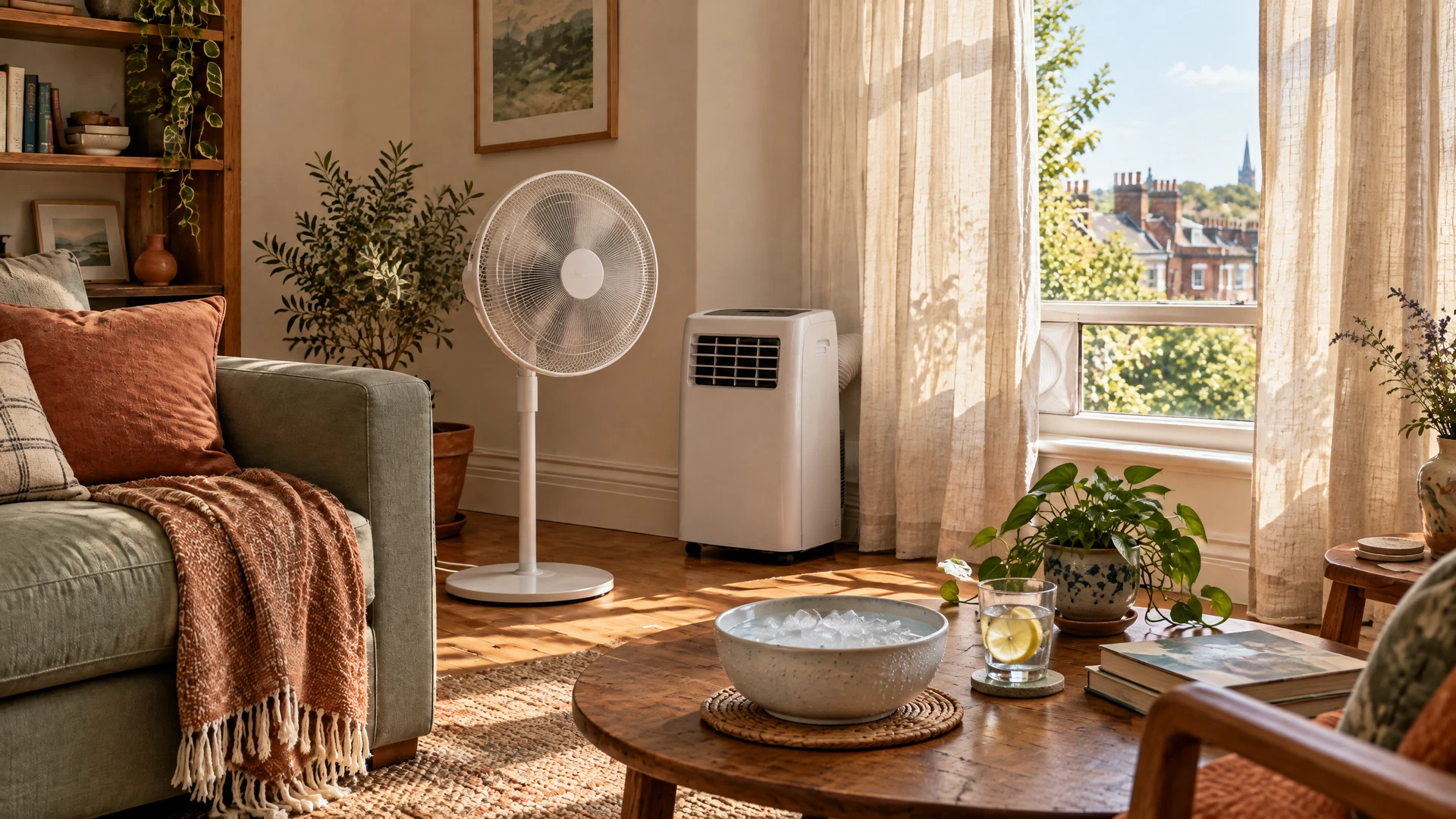
When a heat wave settles in, the difference between a comfortable home and a miserable one usually comes down to a few habits — not how much cooling equipment you own. Get the free stuff right first, then spend only where it actually pays off.
Here is the order we recommend, cheapest and most effective first.
Shut the house down during the day
The instinct to throw open every window backfires in a heat wave. When it is hotter outside than inside, an open window just lets heat in.
- Keep windows closed on the sunny side of the house from late morning through early evening.
- Close blinds, shades, or curtains on any window the sun hits directly. Light-colored or reflective shades block the most heat.
- Shading the glass is the highest-impact move you can make, because windows are where most of the heat arrives.
Open up at night to vent the heat
Once the outdoor temperature falls below the indoor temperature — typically after sunset — open windows on opposite sides of the home to set up a cross-flow. This overnight flush is the most effective free cooling there is.
A box fan or tower fan in an open window, pointed out, pushes hot air out and draws cooler air in behind it. Our best fans for bedrooms guide covers the quiet, high-airflow models worth owning for this.
Aim air at people, not at empty rooms
A fan does not lower room temperature; it lowers your temperature by helping sweat evaporate. So it only helps when it is pointed at someone. Running a fan in an empty room slightly heats it from the motor.
For a hot bedroom, a DC-motor fan on low is quiet enough to sleep through and still moves real air. Motor type and decibel rating matter far more than price.
When a fan is not enough: portable air conditioning
There is a point — roughly when a room stays above 80°F (27°C) overnight for several days — where airflow stops being enough and you need to actually remove heat. That is what an air conditioner does and a fan cannot.
If you cannot install a window or central unit, a portable air conditioner is the flexible option. The trade-offs are real (louder, and it needs a window for the exhaust hose), so read portable vs split AC before buying, and how to size an air conditioner for your room — pay attention to the SACC rating, not just the headline BTU number.
If heat is mainly wrecking your sleep, start with the quietest portable air conditioners for bedrooms shortlist, which ranks on noise first.
Cheap things that genuinely help
- Kill the heat sources. Incandescent bulbs, the oven, and a gaming PC all dump heat. Switch to LEDs; cook outside or late.
- A bowl of ice in front of a fan gives a brief cool draft — fine for a desk, not a room.
- Sleep low. Heat rises, so a basement or lower floor is cooler than an upstairs bedroom.
What to skip
- USB "personal air coolers" that claim to chill a room. They are small evaporative misters and do nothing for ambient temperature.
- Oversizing the AC. A portable that is too big short-cycles, runs loud, and costs more without cooling better. Size it to the room.
Frequently asked questions
Should I open windows during a heat wave? Not during the hottest part of the day, when outside air is hotter than inside. Keep them closed and shaded by day, and open opposite windows after sunset to vent the heat.
Do fans actually cool a room? No. A fan cools you by speeding up evaporation; it does not lower the room temperature. Point it at people and turn it off in empty rooms.
When should I buy a portable air conditioner instead of a fan? When a room stays above about 80°F (27°C) overnight for several days, airflow alone is not enough and you need to remove heat — the job only an AC can do.
What size air conditioner do I need? It depends on square footage, ceiling height, and sun exposure. Check the SACC BTU rating and use our sizing guide — an oversized unit wastes money and runs louder.
Use the advice tool to get a ranked recommendation tailored to your room, budget, and country.
Open the advice tool