How to keep your house cool in a heatwave (2026 Australia guide)
A practical, room-by-room plan for surviving a 40°C day — the free habits that work in an Aussie summer, what to skip, and when a portable AC or a stronger fan actually earns its keep.
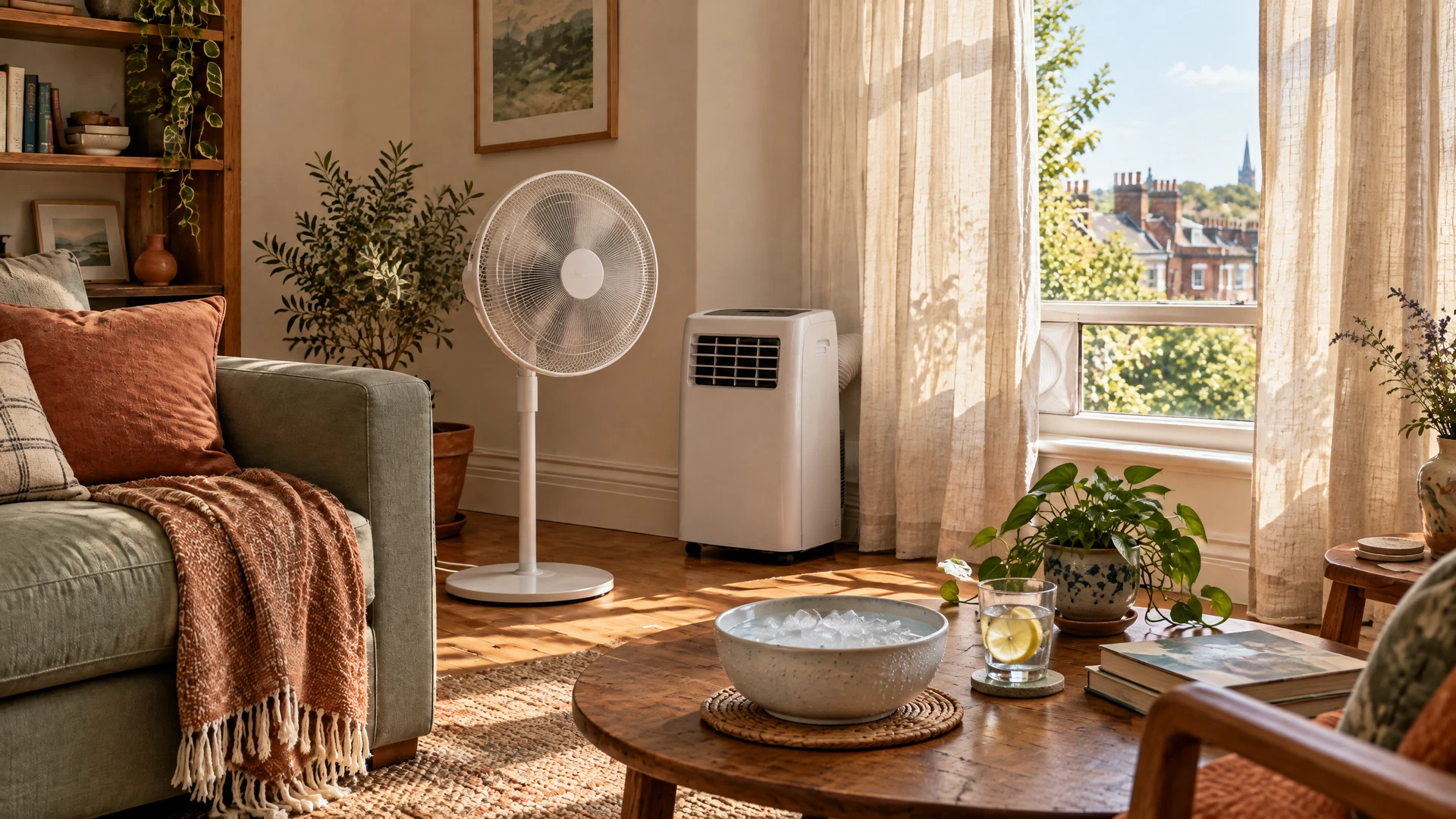
A 40°C Australian day is a different beast, but the playbook is the same one used everywhere heat is serious: get the free things right first, then spend only where it counts. Most homes can be made far more bearable before any new gear is bought.
Here is the order we recommend, cheapest and most effective first.
Close the house down during the day
Throwing the windows open on a scorcher backfires. When it is hotter outside than in, an open window just lets the heat pour in.
- Keep windows shut on the sunny side from mid-morning until the afternoon cools.
- Close blinds, curtains or external awnings on any window taking direct sun. External shading (awnings, shade sails, outdoor blinds) beats internal blinds because it stops the heat before it hits the glass.
- Shading the windows is the highest-impact thing you can do.
Open up once the cool change arrives
When the outside temperature finally drops below the inside temperature — often after a southerly change in the evening — open windows on opposite sides to set up a through-draught and flush the day's heat out.
A pedestal or tower fan in an open window, pointed out, pushes hot air out and pulls cooler air in behind it. Our best fans for bedrooms guide covers the quiet, high-airflow models worth owning for this.
Point the air at people, not empty rooms
A fan does not lower room temperature; it lowers your temperature by helping sweat evaporate. It only helps when it is aimed at someone — a fan in an empty room just adds a little motor heat.
For a hot bedroom, a DC-motor fan on low is quiet enough to sleep through and still moves real air. Motor type and decibels matter far more than price.
When a fan is not enough: portable air conditioning
There is a point — roughly when a room stays above 28°C overnight for several days — where airflow alone stops working and you need to actually remove heat. That is the job an air conditioner does and a fan cannot.
If a split system is not an option, a portable air conditioner is the flexible choice. The trade-offs are real (louder, needs a window for the exhaust hose), so read portable vs split AC before buying, and how to size an air conditioner for your room so you don't overpay for capacity you can't use.
If heat is mainly stopping you sleeping, the quietest portable air conditioners for bedrooms shortlist ranks on noise first.
Cheap things that genuinely help
- Kill the heat sources. Halogen downlights, the oven and a desktop PC all dump real heat. LEDs run cool; cook outside on the barbie.
- Hose down or shade the western wall late in the day to cut the heat soaking into the house.
- Sleep low. Heat rises, so a lower room is cooler than an upstairs bedroom.
What to skip
- USB "mini air coolers" that claim to chill a room — tiny evaporative misters, useless for ambient temperature.
- Oversizing the AC. Too big means it short-cycles, runs loud and costs more without cooling better. Size it to the room.
Frequently asked questions
Should I open the windows on a hot day? Not during the hottest part of the day, when outside air is hotter than inside. Keep them shut and shaded, then open opposite windows once the cool change comes through in the evening.
Do fans actually cool a room? No. A fan cools you by speeding up sweat evaporation; it doesn't lower the room temperature. Aim it at people and switch it off in empty rooms.
When is a portable air conditioner worth it over a fan? When a room stays above about 28°C overnight for several days, airflow alone isn't enough and you need to remove heat — the job only an AC can do.
What size air conditioner do I need? It depends on floor area, ceiling height and sun exposure. Use our sizing guide before buying — an oversized unit wastes money and runs louder.
Use the advice tool to get a ranked recommendation tailored to your room, budget, and country.
Open the advice tool