How to keep your house cool in a heatwave (2026 UK guide)
A practical, room-by-room plan for keeping a British home liveable when the temperature climbs — what works, what is a waste of money, and when a portable AC or a good fan actually earns its keep.
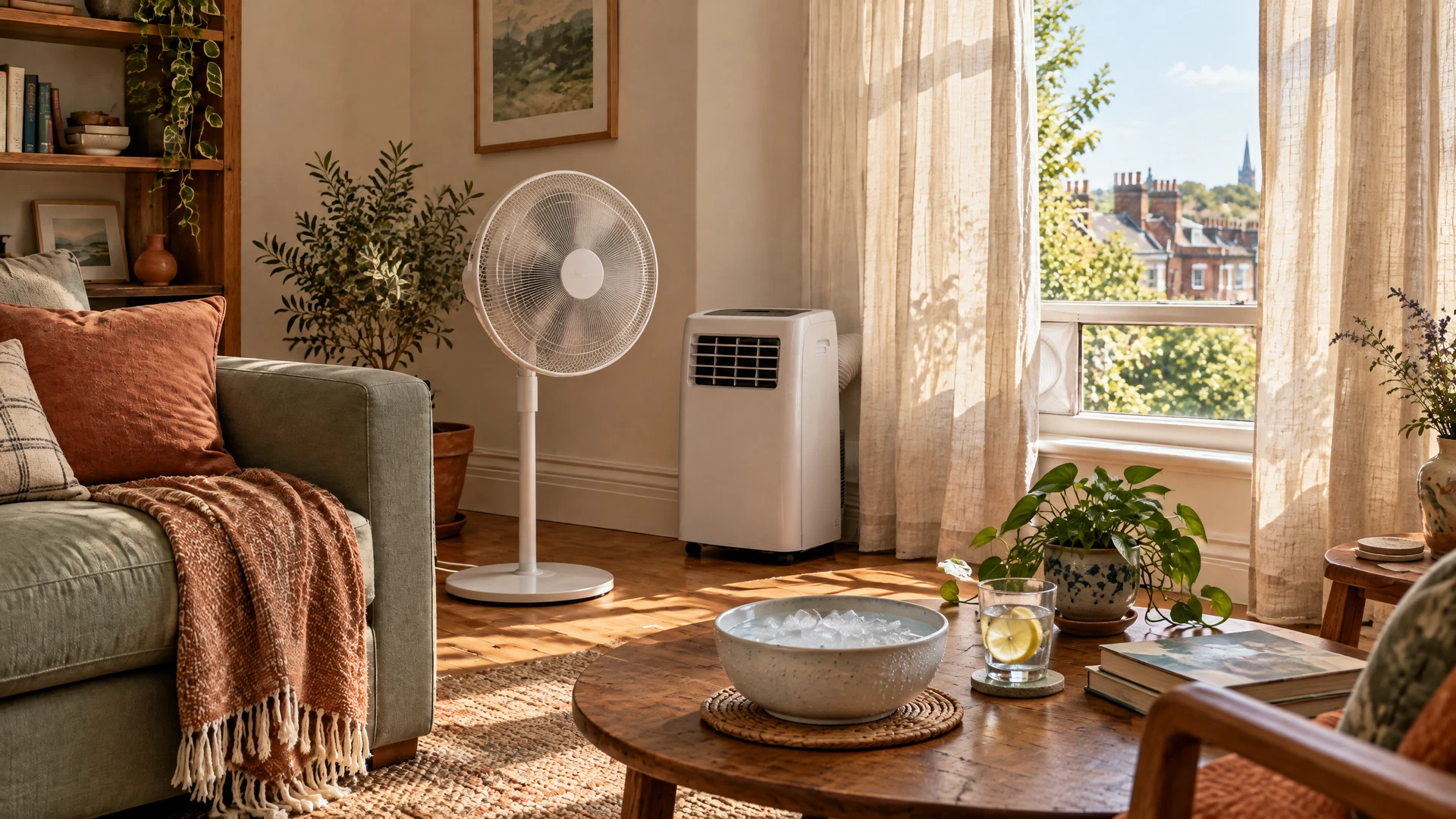
British houses are built to trap heat, not lose it. That is brilliant in January and miserable in a July heatwave, when a south-facing bedroom can sit at 28°C well past midnight. The good news is that most of what keeps a home cool costs nothing — it is about timing and airflow, not kit. The kit only matters once you have done the free things first.
Here is the order we actually recommend, cheapest and most effective first.
Close the house down during the day
The single biggest mistake is opening every window the moment it gets warm. During a heatwave the air outside is hotter than the air inside for most of the day, so an open window is letting heat in.
- From mid-morning until early evening, keep windows shut on the sunny side of the house.
- Close curtains or blinds on any window the sun hits directly. Light-coloured or blackout linings reflect more heat than thin curtains.
- If you only do one thing, shade the windows. Glass is where most of the heat arrives.
Open up at night to flush the heat out
Once the outside temperature drops below the inside temperature — usually after 8–9pm in the UK — open windows on opposite sides of the house to create a through-draught. This "night purge" is the most effective free cooling there is, and it is exactly what a fan is for: not to chill the air, but to move it.
A pedestal or tower fan placed near an open window, pointing out, pushes warm air out and pulls cooler air in behind you. Our best fans for bedrooms guide covers the quiet, high-airflow models that are worth buying for this.
Move air across your skin, not just around the room
A fan does not lower the room temperature — it lowers your temperature by helping sweat evaporate. That means it only helps when it is pointed at a person. A fan running in an empty room is just heating it slightly with the motor.
For a hot bedroom, a DC-motor fan on its lowest setting is quiet enough to sleep through and still moves real air. If you are choosing between models, the dB figures and motor type matter far more than the price.
When a fan is not enough: portable air conditioning
There is a point — roughly when a room sits above 27–28°C overnight for several days — where airflow alone stops working and you need to actually remove heat. That is what an air conditioner does and a fan cannot.
For most UK homes a portable air conditioner is the realistic option, because few properties can fit a fixed split system without permission and installation. The trade-offs are real (they are louder and need a window for the exhaust hose), so it is worth reading portable vs split AC before you spend, and how to size an air conditioner for your room so you do not overpay for BTUs you cannot use.
If the heat is mainly stopping you sleeping, our quietest portable air conditioners for bedrooms shortlist is the place to start — it filters on noise first.
The cheap things that genuinely help
- Switch off heat sources. Old halogen bulbs, the oven, and a desktop PC all dump real heat into a room. LED bulbs run cool; cook late or cold.
- A bowl of ice in front of a fan gives a short-lived cool draught — fine for a desk, useless for a whole room.
- Hang a damp sheet in an open window at night; evaporation cools the incoming air a little.
- Sleep low. Heat rises, so a downstairs room or a floor mattress is cooler than an upstairs bed.
What is a waste of money
- USB "mini air coolers" that claim to chill a room. They are tiny evaporative misters; they do nothing for ambient temperature.
- Buying the biggest BTU portable you can find. An oversized unit short-cycles, runs noisily, and costs more to run without cooling better. Size to the room.
Frequently asked questions
Should I open windows during a heatwave? Not during the hottest part of the day — outside air is usually hotter than inside, so you are letting heat in. Keep them shut and shaded by day, then open opposite windows at night to flush the heat out.
Do fans actually cool a room? No. A fan cools you by speeding up sweat evaporation, but it does not lower the room's temperature. Point it at people, and only run it when someone is there.
When is it worth buying a portable air conditioner instead of a fan? When a room stays above about 27–28°C overnight for several days in a row, airflow alone stops being enough and you need to remove heat. That is the job an air conditioner does and a fan cannot.
What size air conditioner do I need? It depends on the room's floor area, ceiling height, and how much sun it gets. As a rough start, a typical UK bedroom needs around 7,000–9,000 BTU, but read our sizing guide before buying — oversizing wastes money and runs louder.
Use the advice tool to get a ranked recommendation tailored to your room, budget, and country.
Open the advice tool