How to sleep in a heatwave: the bedroom cooling playbook (2026)
Why hot nights wreck your sleep, and a practical order of fixes — from free airflow tricks to the quiet fans and portable AC units that actually make a British bedroom sleepable above 25°C.
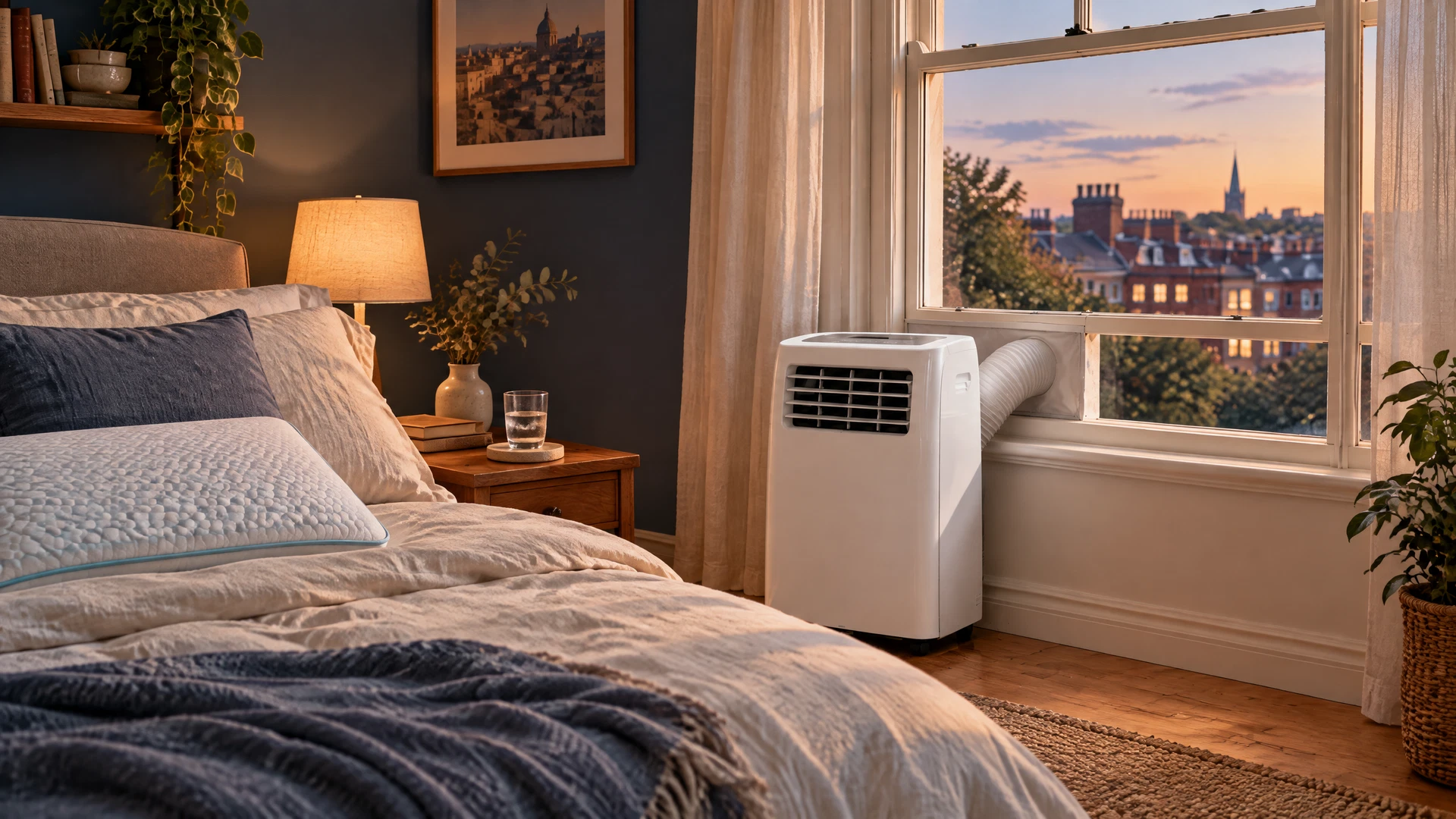
Your body needs to drop its core temperature by about a degree to fall and stay asleep. In a heatwave a stuffy bedroom stops that happening, which is why you lie awake at 2am even when you are exhausted. The fix is not one gadget — it is a sequence, and most of it is free.
Cool the room before you get in it
The bedroom should be doing its cooling work hours before bedtime.
- Keep the curtains or blinds shut all day if the room catches the sun. A west-facing bedroom bakes all afternoon and is still releasing that heat at midnight.
- From mid-evening, open a window — and ideally a second window or door on the other side of the home — to get air moving through.
- Switch off anything that makes heat: standby gadgets, a TV, a phone charging right by your pillow.
Use a fan the right way
A fan is the most cost-effective bedroom cooler there is, but only if you use it for airflow, not "cold air" it cannot produce.
- Position it to create a cross-breeze between two openings, or point it at the bed so moving air helps your sweat evaporate.
- A DC-motor fan is the one to buy for sleeping: on its lowest setting it is quiet enough to disappear into the background while still shifting real air. Our best fans for bedrooms shortlist ranks them by measured noise.
Cool the body, not just the air
- A cool (not cold) shower before bed drops your skin temperature and helps you drift off.
- Cotton or linen bedding breathes; synthetic sheets trap heat and sweat.
- A damp flannel on the wrists or the back of the neck cools the blood close to the surface.
- Keep a glass of water by the bed — dehydration makes hot nights feel worse.
When the room just will not cool down
Some bedrooms — top-floor flats, loft conversions, rooms under a flat roof — simply hold too much heat for airflow to fix. If yours sits above 25–26°C at midnight night after night, a portable air conditioner is the only thing that will reliably bring it down.
The catch is noise: a cheap portable AC can be louder than the heat is uncomfortable. That is why we keep a dedicated quietest portable air conditioners for bedrooms list, filtered on decibels first. If you are weighing it up against a permanent solution, portable vs split AC lays out the real costs, and how to size an air conditioner for your room stops you buying more unit than the room needs.
Frequently asked questions
What is the ideal bedroom temperature for sleep? Most people sleep best between about 16°C and 19°C. Above roughly 24°C, sleep quality drops noticeably, which is why heatwave nights feel so broken.
Is it better to sleep with a fan on all night? Yes for most people — moving air helps you stay cool — but point it across the room or at the bed rather than straight at your face all night, which can dry out your throat and eyes. A quiet DC fan on low is ideal.
Will a portable air conditioner keep me awake? A poorly chosen one can. Compressor noise is the issue, not the fan. Choose a model rated for low-decibel night or sleep modes — our bedroom AC shortlist ranks on exactly this.
Does putting ice in front of a fan work? For a short while and over a small area, yes — the air passing the ice is briefly cooler. It will not cool a whole bedroom for a full night, so treat it as a top-up, not a solution.
Use the advice tool to get a ranked recommendation tailored to your room, budget, and country.
Open the advice tool